
AI can be a game-changing solution for farmers: FAO Innovation Chief
The world faces unprecedented challenges: a growing population, increasing climate extremes, and dwindling natural resources. Feeding the planet sustainably requires a shift, a move away from “business as usual” to embrace innovative solutions that can transform our agrifood systems. This transformation demands not only technological breakthroughs, but also a renewed commitment to collaboration and a willingness to rethink how we produce, distribute, and consume food. At the heart of this effort lies the critical need for strengthened multilateralism, ensuring that the benefits of innovation are shared equitably across the globe.
But what does “innovation” truly mean in the context of agriculture and food security? How can emerging technologies like artificial intelligence be harnessed responsibly to address these global challenges? And what role can international organizations, governments, and even individual citizens play in shaping a more sustainable and food-secure future?
To explore these crucial questions, FAO Newsroom spoke with Vincent Martin, Director of the FAO Office of Innovation. Martin outlines FAO’s vision for innovation, highlights projects underway, and emphasizes the urgent need for collective action to build resilient and equitable agrifood systems.
Let’s talk about innovation at FAO. What does that really mean, in practical terms?
Vincent Martin: Innovation, simply put, is about doing things differently—and doing different things. For me, it’s also about translating science into market opportunities and bringing it into the field. The goal is to harness the power of science and innovation to transform agrifood systems and deliver solutions directly to farmers and those who need them most—helping people build better lives and make a living from agriculture.
In short, it’s about scaling impact and ensuring innovation reaches the last mile.
It’s important to recognize that innovation is not a luxury—it must become the norm. Why? Because we are facing exponential, complex, and interconnected challenges: climate change, biodiversity loss, pandemics, economic and financial crises, and growing global demands. Yet, too often, we respond with linear solutions that fail to match the scale and complexity of these problems.
In other words, we are acting like firefighters—always reacting, rarely anticipating. We’re behind the curve when we need to be ahead of it.
To truly meet the challenges of the 21st century, we must move from linear thinking to holistic, forward-looking, and innovative approaches.
Innovation is essential. It’s also about staying relevant—closing the gap between what we are doing now and what we should be doing to keep pace with rapid change and transformation.


How is FAO utilizing AI, and what potential do you see for it to transform agrifood systems?
AI is now a core element of our digital agriculture strategy. FAO has long been promoting digital agriculture, but the speed and scale of AI’s rise have surpassed expectations. We anticipated a revolution—just not this fast. Now, we must adapt, embrace the change, and ensure AI is used responsibly and ethically.
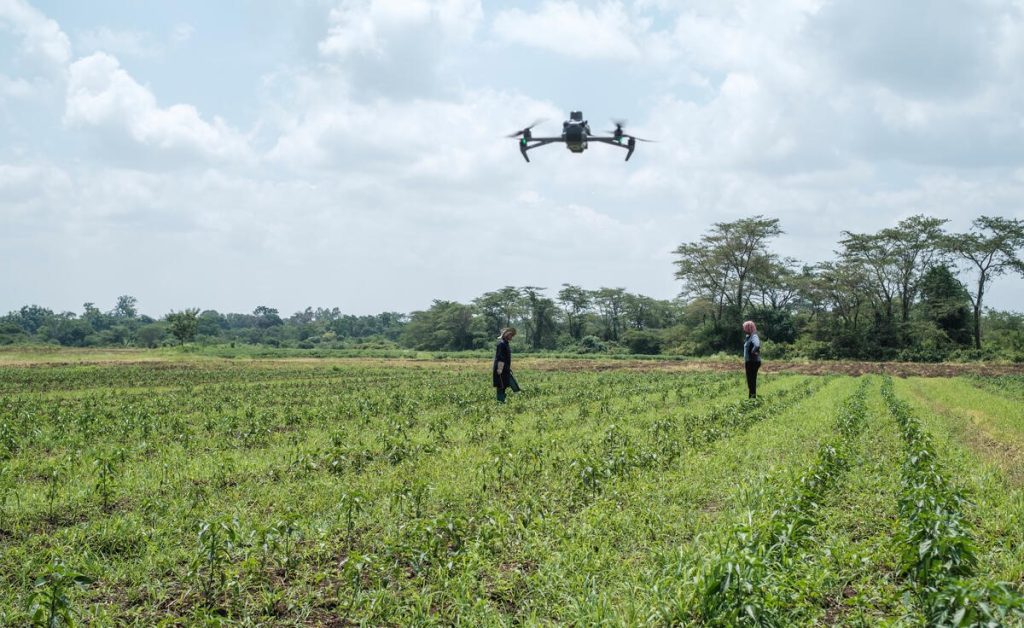
Beyond supporting farmers with digital tools and the Internet of Things to enable more precise, resource-efficient agriculture, we are increasingly exploring how AI can elevate these systems. The real power of AI lies in its ability to detect patterns and relationships we wouldn’t otherwise see—enhancing efficiency, enabling faster decisions, predicting outcomes, and preventing disease outbreaks.
At the global level, we operate platforms like ASIS (Agricultural Stress Index System), which uses satellite imagery to monitor drought conditions. The next generation of ASIS will integrate AI to enhance its accuracy and responsiveness.
One of our most ambitious projects is the development of the world’s first Large Language Model (LLM) for agrifood, built on FAO’s rich data and global expertise. While AI has transformed sectors like finance and healthcare, agrifood remains largely untapped. Our goal is to build a foundational AI model that provides real-time policy guidance, agronomic advice, climate strategies, and access to a global knowledge base—unlocking AI’s full potential for farmers, policymakers, researchers, and businesses.